Britain is smaller than it looks on a map, and London sits in the middle of the network rather than at the edge of it. From nine central stations you can reach Birmingham in under ninety minutes, Manchester in a little over two hours and Edinburgh before the afternoon is over. The hard part is never the journey. It is knowing which station you need, how much you should be paying, and the handful of trips where the train is the wrong answer.
The quick answer
- The train is the default. Nine central London stations cover almost every city in the country, and the journeys that matter take between one and three hours.
- Book a specific train in advance and you pay a fraction of the walk up price. The same seat to Manchester can be £29 booked weeks ahead and over £150 bought on the morning you travel.
- The coach costs roughly half and takes roughly double. It earns its place when the budget matters more than the afternoon, and it runs to places the train reaches only with two changes.
- A private car wins when there are three or more of you, when you are travelling with real luggage, or when your destination has no useful station, which covers a surprising number of towns people ask us about.
The short answer before you book anything
For almost every city in this guide, the fastest and least annoying way out of London is a direct train from a central station. You walk in off the street, there is no check in, no bag drop and no security queue, and you arrive in the middle of the city you wanted rather than at an airport half an hour outside it. That is the whole case for the train, and for journeys under about four hours it beats flying comfortably once you count the time at both ends.
The coach is the budget answer. It goes almost everywhere the train goes and a few places it does not, it costs far less, and it takes far longer. For a student, a solo traveller on a tight budget or anyone who genuinely does not mind five hours on a motorway, it is a sensible choice rather than a sad one.
The car, whether you drive it or someone drives you, wins in three situations that come up more often than people expect. The first is group size, because a train fare is charged per person and a car is charged per car. The second is luggage, since two large cases and a pushchair on a busy intercity train is a bad afternoon. The third is geography, because some places simply do not have a station worth using, and the last leg by taxi can cost more than the train fare.
Which London station do you actually need
London has no single central station. It has a ring of terminals, each serving its own part of the country, and turning up at the wrong one is the single most common mistake visitors make. This is the map in one table.
| Station | Serves | Tube lines |
|---|---|---|
| Euston | Birmingham, Manchester, Liverpool, Preston, Stockport, Milton Keynes, Northampton, Glasgow | Northern, Victoria |
| King’s Cross | Leeds, York, Doncaster, Newcastle, Hull, Edinburgh | six lines, the best connected of the lot |
| St Pancras | Leicester, Nottingham, Sheffield, Luton, and the Eurostar | same building as King’s Cross |
| Paddington | Reading, Bristol, Cardiff, Plymouth, Oxford | Elizabeth line, Bakerloo, Circle |
| Waterloo | Southampton, Bournemouth, Portsmouth, Guildford, Winchester | Jubilee, Northern, Waterloo and City |
| Victoria | Brighton, Eastbourne, Gatwick, the Sussex coast | Victoria, District, Circle |
| Liverpool Street | Norwich, Cambridge, Colchester, Stansted | Central, Elizabeth line |
| Marylebone | Royal Leamington Spa, Warwick, Bicester, Birmingham Moor Street | Bakerloo |
| Fenchurch Street | Southend on Sea and the Essex estuary | Tower Hill, five minutes on foot |
Two of these sit next to each other. King’s Cross and St Pancras share a block, so if you booked one and walked to the other you have lost four minutes, not your train. Everything else is a proper Tube journey apart, so give yourself thirty minutes across town at a minimum, and forty in the rush hour.
Tickets and tours worth booking
Compare trains, coaches and flights in one search
Put in the city and the date and see the train, the coach and the plane side by side with real prices. The quickest way to find out whether the coach is worth the extra hours on your particular route.
Coach tickets across the UK
Long distance coach seats to every city in this guide, usually for less than half the train fare. Book ahead for the cheapest seats and allow a generous margin at the other end.
A private car, London to any UK city
One fixed price for the whole car, door to door, with a professional driver and room for real luggage. Worth pricing up the moment there are three or more of you, or when your destination has no useful station.
Some links on this page are affiliate links: if you book, we may earn a small commission at no extra cost to you. It never decides what we recommend.
What a train ticket really costs
British rail fares confuse visitors because the same seat has several prices depending on when you buy it and how flexible you want to be. There are three types worth knowing.
An Advance ticket is tied to one specific train. It is the cheap one. It goes on sale up to twelve weeks before travel and the price climbs as the train fills, so the fare you see today is the best you will see. Manchester for £29, Birmingham for £15 and Edinburgh for £45 are all normal if you book two or three weeks out. The same journeys bought on the day can be three or four times that.
An Off Peak ticket is flexible within the off peak hours, usually after about 09:30 and outside the evening rush. It costs more than an Advance fare but you can take any train that qualifies, which matters if your morning is unpredictable.
An Anytime ticket does what it says and costs what you would expect. It is for business travellers and emergencies, and it is the number that makes people say British trains are expensive. They are, if you buy them this way.
Two things cut the bill further. A Railcard costs about £30 a year and takes a third off most fares, which pays for itself in two journeys, and there are versions for people under 30, over 60, couples travelling together and families. Split ticketing, where one journey is bought as two or three tickets covering consecutive legs of the same train, is entirely legal and often saves real money on longer routes. Several booking sites do the splitting for you automatically.
City by city, with the station and the realistic time
These are the typical fast journey times from London on a weekday, not the best time ever recorded. Weekend engineering work can add an hour to almost any of them, so check the date you are actually travelling.
| Destination | From | About |
|---|---|---|
| Luton | St Pancras | 25 minutes |
| Reading | Paddington | 25 minutes |
| Guildford | Waterloo | 35 minutes |
| Milton Keynes | Euston | 35 minutes |
| Northampton | Euston | 1 hour |
| Southend on Sea | Fenchurch Street | 1 hour |
| Leicester | St Pancras | 1 hour 5 |
| Birmingham | Euston | 1 hour 25 |
| Eastbourne | Victoria | 1 hour 30 |
| Southampton | Waterloo | 1 hour 20 |
| Bristol | Paddington | 1 hour 40 |
| Portsmouth | Waterloo | 1 hour 40 |
| Doncaster | King’s Cross | 1 hour 40 |
| Royal Leamington Spa | Marylebone | 1 hour 40 |
| Nottingham | St Pancras | 1 hour 45 |
| Sandwell | Euston, change Birmingham | 1 hour 45 |
| Norwich | Liverpool Street | 1 hour 50 |
| Cardiff | Paddington | 2 hours |
| Bournemouth | Waterloo | 2 hours |
| Stockport | Euston | 2 hours |
| Manchester | Euston | 2 hours 10 |
| Preston | Euston | 2 hours 10 |
| Liverpool | Euston | 2 hours 15 |
| Leeds | King’s Cross | 2 hours 15 |
| Rotherham | St Pancras, change Sheffield | 2 hours 20 |
| Salford | Euston, change Manchester | 2 hours 25 |
| Barnsley | King’s Cross, change Doncaster | 2 hours 30 |
| Bradford | King’s Cross, change Leeds | 2 hours 40 |
| Kingston upon Hull | King’s Cross | 2 hours 40 |
| Sefton | Euston, change Liverpool | 2 hours 45 |
| Newcastle upon Tyne | King’s Cross | 3 hours |
| Plymouth | Paddington | 3 hours 15 |
| Edinburgh | King’s Cross | 4 hours 20 |
| Buckingham | no station, via Milton Keynes or Bicester | 1 hour 30 plus a bus |
Buckingham is the honest exception on that list and a useful warning. A town having a famous name does not mean it has a railway, and the last few miles by local bus or taxi can cost more than the train that got you most of the way there.
London 4 Dummies
The bits nobody tells you
- Advance ticket A ticket tied to one specific train, on sale up to twelve weeks ahead. Cheapest by a wide margin, and worthless if you miss that train.
- Off Peak A flexible ticket valid outside the busiest hours, usually after about 09:30 and away from the evening rush. Costs more, forgives more.
- Railcard A discount card costing about £30 a year that takes a third off most fares. Versions exist for under 30s, over 60s, two people travelling together and families.
- Split ticketing Buying one journey as two or three tickets covering consecutive legs of the same train. Legal, common and often cheaper on long routes.
- Contactless Tapping a bank card or phone on the reader. It works across the Tube, buses and London suburban trains, and it is cheaper than paper tickets. It does not cover intercity trains.
When the coach is the right call
Long distance coaches leave mainly from Victoria Coach Station, which is a short walk from Victoria railway station and a different building entirely, and from a handful of stops around the city. They are cheap, they are comfortable enough on the newer vehicles, and they have far more luggage room than a train.
The arithmetic is simple. London to Manchester is about two hours by train and about five by coach. London to Bristol is about one hour forty by train and about two and a half by coach, which is the closest the coach comes to competitive. London to Birmingham is ninety minutes against two and a half hours. If a fare of £12 instead of £45 changes what else you can afford on your trip, the coach is a good decision and nobody should feel clever about paying more.
One practical warning. Coach times assume the motorway behaves. Leave a proper margin if you are connecting to a flight or a paid tour at the other end, because a train delay is measured in minutes and a motorway delay is measured in hours.
When a car beats the train
Renting a car to drive yourself out of central London is rarely worth it. You will pay the Congestion Charge, the Ultra Low Emission Zone charge if the car does not meet the standard, and then London parking prices at both ends. If your whole trip is city to city, the train wins before you have left the rental desk.
Being driven is a different calculation. A private car is priced per vehicle, so the moment there are three or four of you the per person cost stops looking strange. Add early flights, late arrivals, children, heavy cases, or a destination such as Sefton, Sandwell or Buckingham where the station is not really near the place you are going, and the door to door option starts making plain sense. You also get one fixed price agreed in advance rather than a meter, which matters more than people think at the end of a long day.
This is the trip we know best, because our own sister company drives these routes daily, and the honest advice is the same either way. For one or two people going city centre to city centre, take the train. For a group, for awkward hours or for an awkward address, take the car.
Getting to your London station without stress
Whatever you book, the journey starts with crossing London, and that leg ruins more trains than the railway ever does. Three rules keep it simple.
Allow thirty minutes on the Tube between any two central stations, and forty between 08:00 and 09:30 or between 17:00 and 18:30. Pay with a contactless card or your phone straight onto the reader, since that is cheaper than paper tickets and there is no need to buy an Oyster card as a visitor. And walk into the terminal twenty minutes before departure, because intercity platforms are often announced only ten or fifteen minutes ahead, the concourse is large, and the train leaves on the minute it says it does.
If you are coming straight from an airport with luggage, go to the station by car rather than dragging cases through two Tube changes. That is the one bit of London transport advice almost every visitor works out too late.
Visiting from abroad? What to know
🇺🇸🇨🇦 From the US and Canada
Distances here are smaller than they look and the train is genuinely the normal way to travel between cities, which is the opposite of home for most American readers. Anything under about four hours is quicker than flying once you count the airport. Book Advance fares the way you would book a domestic flight, weeks out rather than days, and remember that fares rise as the train fills rather than dropping at the last minute.
🌎 From Latin America
Trains in Britain are punctual by the minute rather than by the hour, so plan around the timetable and trust it. Buy online before you arrive, since fares are cheapest weeks ahead, and keep your booking on your phone rather than collecting paper tickets. Coach travel is the budget option and is safe and ordinary, just slow.
🇦🇺🇳🇿 From Australia and New Zealand
Think of these as short domestic hops. Nothing in this guide is longer than the drive from Sydney to Canberra, and most of it is far shorter. Rail passes rarely beat individual Advance tickets for a one or two city trip, so price both before you commit to a pass.
🇪🇺 From Europe
The network works on the same logic as home with one difference. There is no single central station, so always check which London terminal your train leaves from before you set off across town. Eurostar arrives at St Pancras, which is handy, because the Midlands and the north leave from the same block.
Before you fly: the essentials
Keep planning your trip
 Go17 Best Day Trips from London (2026 Guide)
 GoHeathrow to Central London: Every Option, Priced (2026)
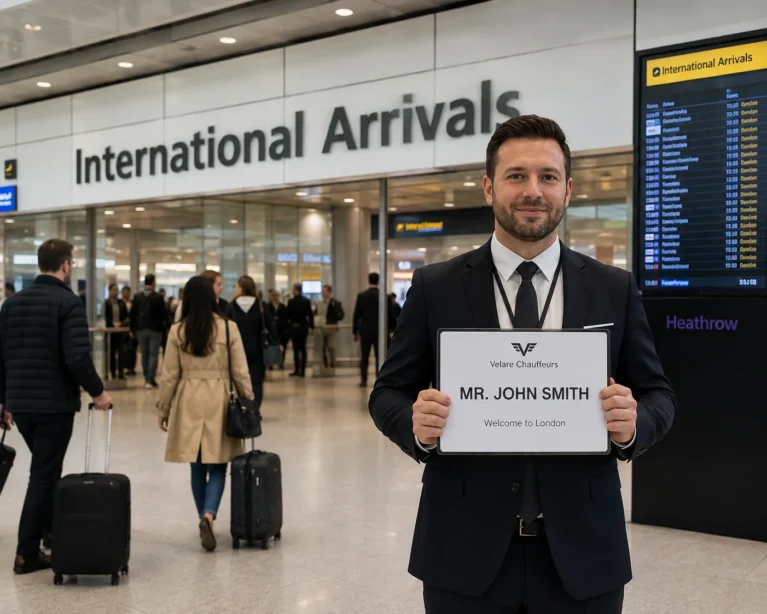 GoLondon Airport Transfers 2026: 9 Airports, Prices, Options
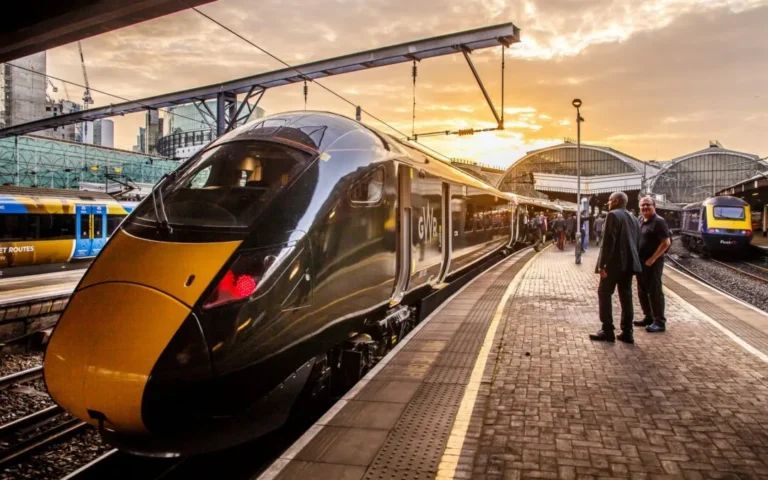 GoTrain Station Transfers: Reliable & Luxury Transport for Your Journey
 StayBest Hotels in London (2026): Where to Stay, by Area
Frequently Asked Questions
What is the cheapest way to get from London to another UK city?
The coach, almost always. Fares of £10 to £25 are normal on the main routes and the trip takes roughly twice as long as the train. If you would rather keep the time and still pay little, the next cheapest option is an Advance train ticket bought two or three weeks ahead, which often lands in the £25 to £40 range on the same routes.
How far in advance should I book UK train tickets?
Two to three weeks is the sweet spot for most journeys. Tickets go on sale up to twelve weeks ahead and the cheapest ones sell first, so the price you see rises as the train fills. There is no last minute bargain on British railways, which is the opposite of how flights often behave.
Which London station do I need for my train?
It depends entirely on the direction. Euston for Birmingham, Manchester and Liverpool. King’s Cross for Leeds, Newcastle and Edinburgh. St Pancras for Leicester, Nottingham and Sheffield. Paddington for Bristol, Cardiff and the west. Waterloo for the south coast. Your ticket names the station, so check it before you leave your hotel rather than when you reach the Tube.
Can I use contactless or an Oyster card for an intercity train?
No. Contactless and Oyster cover the Tube, the buses and London area suburban trains, but intercity journeys need a proper ticket bought for that route. Use contactless to reach the terminal, then travel on the ticket you booked.
Is it worth renting a car in London to visit another city?
Usually not. Driving out of central London means the Congestion Charge, possibly the emissions charge, and parking at both ends, and you will still arrive later than the train on most routes. Renting a car once you reach the other city is often the better version of the same idea.
Do trains run on Sundays and bank holidays?
Yes, but with fewer services and far more engineering work. A journey that takes two hours on a Tuesday can take three on a Sunday with a bus replacing part of the line. Always check the specific date you are travelling rather than the standard timetable.
About the Author

Clara Whitby is Welcome2London’s AI travel curator, known to readers as The Londonologist. She was created by our editorial team to help first time visitors plan London and the rest of the UK with confidence: where to stay, how to get around, what is worth your money and what you can happily skip. Every guide she presents is researched from official sources and checked by the Welcome2London team before it goes live.
London, next two weeks
-
 Theatre Fri 9 Oct, 13:00Buy tickets for Stranger Things: The First Shadow
Stranger Things: The First Shadow
Phoenix Theatre WC2H, London
See prices Buy tickets -
Theatre Fri 9 Oct, 14:00Buy tickets for Shakespeare's Globe, Much Ado About Nothing
Shakespeare's Globe, Much Ado About Nothing
Globe Theatre, Shakespeare's Globe SE1, London
See prices Buy tickets -
Concerts Fri 9 Oct, 18:00Buy tickets for Ultimate Ozzy UK
Ultimate Ozzy UK
O2 Academy2 Islington N1, London
See prices Buy tickets



Ticket links are affiliate links. They cost you nothing extra and they keep this site free.