This guide contains affiliate links. If you book through one we may earn a small commission at no extra cost to you, and it does not change what we recommend. How this works.
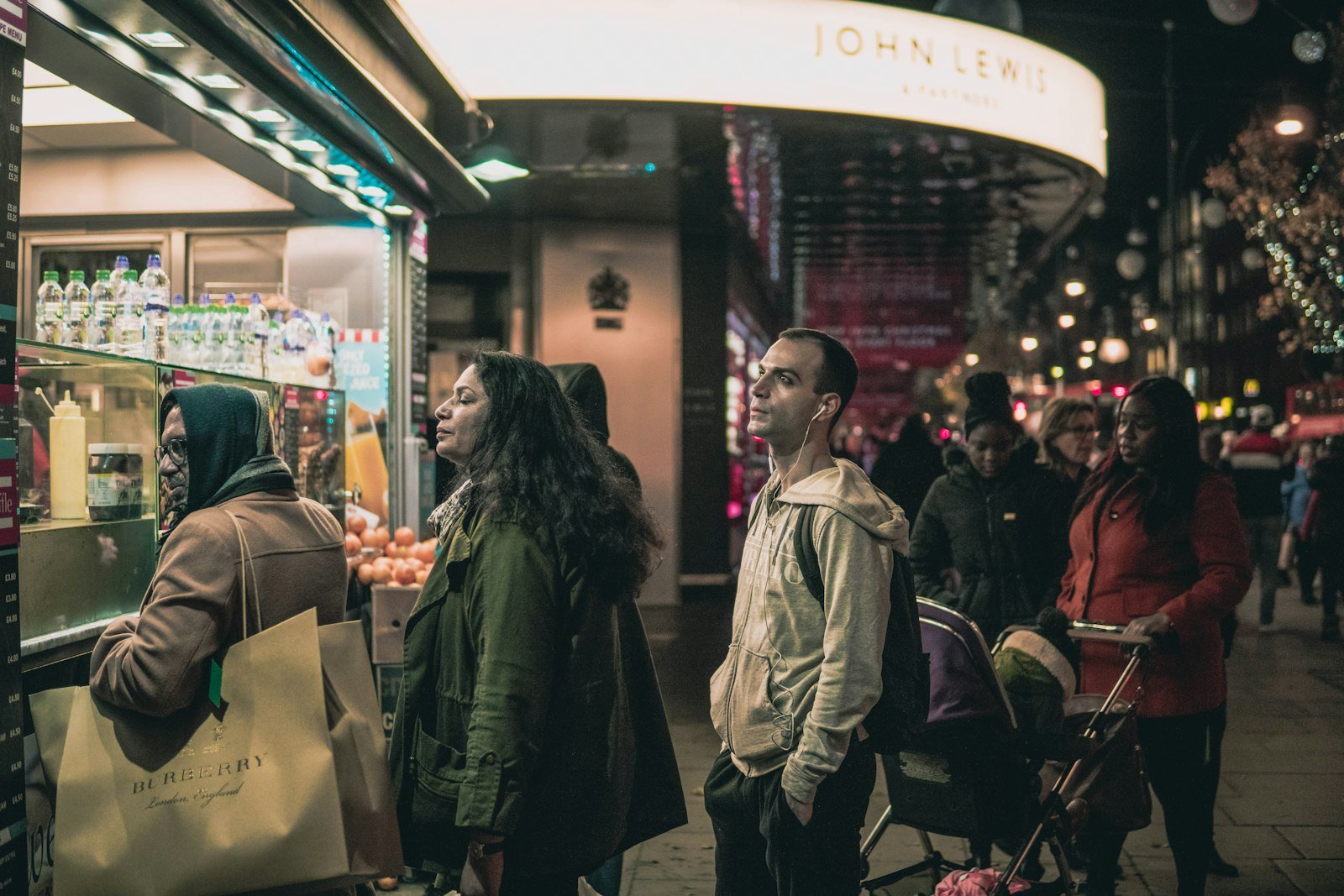
The London sales begin earlier than most visitors expect and run later than they realise. Boxing Day, Saturday 26 December 2026, is the headline event: department stores throw open the doors, queues form on Oxford Street before the sun is properly up, and the markdowns then roll on until the middle of January. This guide is for visitors who want to shop the sales deliberately rather than stumble into a scrum: the dates that matter, what is open and when, the Sunday trading rule that quietly shortens one of the best shopping days of the year, and how a newly traffic-free Oxford Street changes the way you get there and back with your bags.
The quick answer
- The dates: Black Friday falls on 27 November 2026 and Cyber Monday on 30 November. Christmas Day is Friday 25 December, Boxing Day is Saturday 26 December, and the substitute bank holiday is Monday 28 December.
- When the sales start: Most department stores open their post-Christmas sales on 26 or 27 December and run them into mid January, with the sharpest reductions saved for the final few days.
- Opening hours: By law, large shops must close on Christmas Day. On Sunday 27 December they may trade for only six consecutive hours between 10am and 6pm, so that day is shorter than it looks.
- Getting there: There is no Tube at all on Christmas Day and a reduced service on Boxing Day. Since 26 October 2026, the stretch of Oxford Street from Orchard Street to Great Portland Street has been closed to vehicles, which means no buses and no taxis along it.
- Tax refunds: There are none. VAT refunds for overseas visitors taking goods home in their luggage ended on 1 January 2021, so budget for the shelf price.
When do the Boxing Day and January sales actually start?
Ask ten Londoners and you will get ten answers, because the modern sale season is really three overlapping events. The first wave is Black Friday, which in 2026 lands on 27 November and stretches through Cyber Monday on 30 November. That is a largely online affair with some in-store discounting, and it thins out the stock that would once have been saved for the winter.
The second wave is the real one: Boxing Day. Most high street shops and department stores begin their post-Christmas sales on 26 or 27 December. Visit London puts the typical finish line at mid January, and notes that many stores make extra cuts in the final days before the sale closes. That matters for planning. If you want the best choice of sizes and the complete range, go on Boxing Day itself. If you want the deepest percentage off and you do not mind picking through what is left, the second week of January is where the bargains hide.
The third wave is the quiet one. January sales do not end cleanly. Outlet centres and some luxury houses keep discounting into late January, and a handful of stores simply roll into their spring stock. If your trip falls in the first fortnight of January, you are still firmly in sale season, just with fewer crowds and better coffee queues.
Clara’s tip: If you are choosing between 26 December and the January run, think about what you are buying. Clothing and shoes need size availability, so go early. Homeware, luggage, cookware and electronics hold their stock better, so January rewards patience.
What is open on Boxing Day 2026, and what is firmly shut
Christmas Day is the strictest day in the British retail calendar. Under the trading hours law for England and Wales, large shops (anything over 280 square metres) must close on Christmas Day. There is no negotiating it, no late opening, no exceptions for tourists. Small shops may open, which is why you can usually find a corner shop, a Pret or a hotel bar, but the department stores are dark. If you are in town on 25 December, treat it as a walking and eating day rather than a shopping one, and read our guide to London on Christmas Day before you make plans.
Boxing Day is the opposite. Saturday 26 December 2026 is a full trading Saturday, not a restricted Sunday, which is good news: the big stores can open for as long as they like. In practice most choose an early start and a slightly earlier close than usual, and some open at 9am or even earlier to absorb the queue.
Monday 28 December is the substitute bank holiday, because Boxing Day falls on a Saturday this year. Bank holiday does not mean shops shut. It means offices, banks and some services close, while retail carries on more or less normally, often on Sunday-style reduced hours.
| Date | Day | What to expect |
| 24 December | Thursday | Christmas Eve, early closing, often 4pm to 6pm |
| 25 December | Friday | Large shops closed by law |
| 26 December | Saturday | Boxing Day, sales begin, full Saturday hours |
| 27 December | Sunday | Large shops limited to six hours, 10am to 6pm window |
| 28 December | Monday | Substitute bank holiday, shops mostly open |
| 1 January | Friday | New Year’s Day bank holiday, reduced hours |
Book the shopping extras that are worth booking
Bicester Village Shopping Trip from London with VIP Discount
Round-trip coach between central London and Bicester Village, with an e-VIP code giving an extra 10% off at participating boutiques. Departures from Marble Arch, Victoria, Kensington and St James’, with onboard Wi-Fi. Saves you buying train tickets and working out the connection.
London Christmas Lights Tour by Vintage Double-Decker Bus
An evening run on a restored fifty-year-old double-decker past the Oxford Street and Regent Street displays, with Harrods, Trafalgar Square and the Houses of Parliament along the way. Live guide on board. Departs Victoria Coach Station, Gate 0. A sensible way to see the lights when your feet have given up.
Kew Gardens entry
Kew is the antidote to a day of elbows and escalators: three hundred acres of glasshouses and winter planting, forty minutes from the West End. A good use of the quiet days between the Boxing Day rush and the January reductions, especially with children in tow.
Private car for your shopping day or airport run
With Oxford Street now closed to taxis along the main stretch, and the Tube uncomfortable when you are carrying bags, a pre-booked car with a fixed price and an agreed pick-up point is the civilised option. Also the only reliable way to move on Christmas Day, when public transport stops entirely.
Some links on this page are affiliate links: if you book, we may earn a small commission at no extra cost to you. It never decides what we recommend.
The Sunday 27 December trap that catches visitors out
This is the single most useful thing in this guide, and almost no one tells visitors about it. In England and Wales, any shop larger than 280 square metres may open on a Sunday for only six consecutive hours, and those six hours must sit between 10am and 6pm. The restricted hours have to be displayed inside and outside the shop.
Work through what that means for 27 December 2026. It is the day after Boxing Day, the sales are in full flow, the crowds are enormous, and Selfridges, Harrods, John Lewis, Liberty and every Westfield anchor store are all running on a six hour clock. Most settle on something like 11.30am to 6pm or noon to 6pm. If you arrive at 10am expecting the doors to be open, you will be standing outside with a coffee for ninety minutes.
Small shops are exempt entirely, so the independents in Covent Garden, Seven Dials and Carnaby can trade all day. So can shops inside railway stations and airports, which is a genuinely useful loophole if you are flying out and want one last browse.
Clara’s tip: Treat Sunday 27 December as your small-shop day. Do Oxford Street and the department stores on Saturday the 26th or Monday the 28th, and spend the Sunday in Covent Garden, Marylebone High Street and the arcades off Piccadilly, where the six hour rule does not apply.
Oxford Street is traffic-free this winter: what that means for you
Oxford Street looks and works differently this sale season. From Monday 26 October 2026, vehicles have been barred from the stretch between Orchard Street and Great Portland Street, roughly nine hundred metres of the busiest shopping street in Europe, including the Oxford Circus junction. It is the live testing phase of the Mayor’s long-running transformation scheme, run through the Oxford Street Development Corporation, which was established on 1 January 2026.
For a shopper, the upside is obvious: on Boxing Day you will be walking down a road rather than squeezing along a pavement, which with Boxing Day crowd volumes is a real improvement. The downside is logistical. Buses are banned from that section, which affects daytime routes 7, 94, 98, 139 and 390 and night routes N7, N98, N113, N137 and N207. Some are diverted, some terminate early at Marble Arch, and eastbound services run via Wigmore Street and Regent Street instead. Replacement stops sit roughly 100 to 200 metres off Oxford Street.
Taxis and private hire vehicles are also barred from the closed stretch, so you cannot be dropped at the door of Selfridges or collected outside John Lewis with six bags. Plan your pick-up point before you start shopping, not after. The Tube is unaffected: Marble Arch, Bond Street, Oxford Circus and Tottenham Court Road all still serve the street directly.
London 4 Dummies
London 4 Dummies: sale season edition
- Boxing Day has nothing whatsoever to do with boxing. No gloves, no ring, no Rocky. The name comes from the old tradition of giving servants and tradespeople a Christmas box the day after Christmas. Today it means sales, leftover turkey and football on the television. Nobody punches anybody.
- The queue is a sacred national institution. If you see a line outside Selfridges at 7am, that line has rules, and the rules are enforced by silent collective disapproval rather than by staff. Do not cut in. Do not stand slightly to one side and edge forward. Join the back, like everyone else, and you will be welcomed as one of our own.
- The price on the tag is the actual price you pay. VAT is already baked in. No tax gets added at the till, and nobody expects a tip for selling you a jumper. The forty pound jumper costs forty pounds. Americans find this almost suspiciously pleasant.
- The ground floor is not the first floor. In a British department store, the floor you walk in on is the ground floor. The first floor is one up from that. So when the directory says menswear is on the second floor, you are climbing two flights, not one. This causes more confusion in Harrods than anything else in this article.
- Just tap. Everything. Always. Contactless cards and phones work in virtually every shop, every bus and every Tube barrier. You do not need cash, you do not need a travel card, and you do not need to sign anything. Tap on the yellow reader and walk.
- It will be dark by four in the afternoon. In late December the light goes early and goes fast. This is not a bug, it is the season, and it is why the Christmas lights look so good at teatime. Start your shopping day early, and plan your photographs for the afternoon rather than the evening.
Harrods, Selfridges and where the luxury sales really are
The department store sales are the heart of the thing. Selfridges on Oxford Street runs six floors of reductions and is the classic Boxing Day destination, with the queue forming on Duke Street long before opening. Harrods in Knightsbridge is the luxury play: its winter sale is where the serious discounts on designer goods appear, and it is also where the queue is most theatrical. Liberty, just off Regent Street, discounts beautiful things in a beautiful building, and Fortnum and Mason, Harvey Nichols, Fenwick and Peter Jones all run their own versions.
If you would rather have everything under one roof and out of the rain, the two Westfields are the pragmatic answer. Westfield London at Shepherd’s Bush and Westfield Stratford City, the latter with more than two hundred stores, both run full sale programmes and both have the advantage of indoor warmth, seating and a lot of places to eat.
For designer discounting without the Boxing Day crush, Bond Street and King’s Road hold their own, and ICON Outlet at The O2 and London Designer Outlet in Wembley discount year round. Our wider guide to the London shopping experience maps out the districts in more detail if you want to build a route.
Clara’s tip: Pick one destination and stay there. The classic visitor mistake is trying to do Knightsbridge, Oxford Street and Covent Garden in one Boxing Day. You will spend the day on the Tube with sore feet and nothing bought. One area, done properly, beats three done badly.
Bicester Village and the outlets: is the day trip worth it?
Bicester Village, the designer outlet in Oxfordshire, is the single most asked-about shopping destination among visitors to London, and the honest answer is: yes, if you plan it, no, if you wander.
Getting there is straightforward. Chiltern Railways runs direct trains from London Marylebone to Bicester Village station, with two trains an hour and a journey from 46 minutes. Chiltern advertises a return trip from £28. One important detail that catches people out: contactless and Oyster are not valid on that route, so you must buy an actual ticket, ideally online in advance as an e-ticket.
The alternative is a coach package, which bundles the round trip with a discount card and saves you working out the train. It is the easier option if you are travelling with family or if you simply want someone else to handle the logistics on a cold December morning.
Two warnings. First, Bicester is extremely busy in late December and the queues for the popular boutiques can run to half an hour. Second, it is a full day, so do not try to combine it with a West End afternoon. Go on a weekday if your dates allow, and go early.
Getting around London during sale week
Transport over the festive period runs on its own rules, and sale week is exactly when that bites. On Christmas Day there is essentially no Transport for London service at all: no Tube, no buses, no trains. Santander Cycles keep running, and taxis and private hire operate, usually at a premium. If you need to move on 25 December, book a car in advance or walk.
Boxing Day brings a partial service back, but with changed frequencies and timetables rather than a normal Saturday. Historically some lines and modes do not run at all on 26 December, so check the TfL status page the night before rather than assuming. National Rail is a separate problem: the railway traditionally uses the Christmas and New Year window for major engineering work, so long-distance routes and some London terminals can be closed or diverted. Check before you travel, every single day of that week.
One cheerful exception: TfL traditionally makes travel free on New Year’s Eve from late evening into the early hours of 1 January, which is handy if you are combining the sales with New Year’s Eve in London.
Clara’s tip: If you have shopped hard, do not take the Tube home. Oxford Circus station on Boxing Day evening, with everyone carrying bags, is genuinely unpleasant and is sometimes closed for crowd control. Book a car, agree the pick-up point in advance (remember Oxford Street itself is now closed to vehicles), and enjoy the lights on the way back.
Money, tax and getting your shopping home
Start with the disappointment, because it is better to know now. There is no tax-free shopping for visitors in Great Britain. The VAT Retail Export Scheme, which let overseas visitors reclaim VAT on goods carried home in their luggage, was withdrawn from 1 January 2021. Shops at the airport will still sell you duty-free alcohol and tobacco, and retailers can still sell VAT-free if they ship the goods directly to an address outside the UK, but you cannot buy a handbag on Bond Street and claim the tax back at Heathrow. Anyone who tells you otherwise is working from an old guidebook.
The good news is that the price on the tag already includes VAT. What you see is what you pay at the till, with no tax added at the end and no tipping in shops. Cards are accepted essentially everywhere and contactless is the default, including on buses and the Tube.
For bulky purchases, most department stores offer international shipping, which can work out cheaper than paying airline excess baggage. Ask at the till before you buy, not after. And do check your home country’s import allowance: a sale bargain stops being a bargain once customs duty is applied at the other end. If you are still deciding when to come, our guide to the best time to visit London sets the sale season against the rest of the year.
Visiting from abroad? What to know
🇺🇸🇨🇦 From the US and Canada
You will need an Electronic Travel Authorisation, which costs £20 and covers visits of up to six months. Apply before you fly, and apply on the official GOV.UK service rather than a lookalike site charging more. London is five hours ahead of New York, so jet lag works in your favour for a 7am queue. Expect late December temperatures roughly in the high 30s to upper 40s Fahrenheit, damp rather than freezing, so waterproof shoes matter more than a heavy coat. And remember: no sales tax is added at the till, and no tipping in shops.
🌎 From Latin America
Entry requirements vary considerably by nationality, so check your own passport on GOV.UK well before booking: some Latin American travellers need only an ETA, while others require a full visitor visa, which takes substantially longer to arrange. London in late December is cold and dark by local standards, which is a genuine shock if you are flying from a southern summer. Cards are accepted everywhere and the pound is the only currency you need, so there is no reason to carry much cash.
🇦🇺🇳🇿 From Australia and New Zealand
Australian and New Zealand passport holders travel on an ETA rather than a visa. You are arriving in the depth of the northern winter from the height of your own summer, so pack properly: a warm layer, a rain layer and shoes you can walk eight hours in. London is typically eleven hours behind Sydney in December, which means your body clock will have you awake absurdly early, and on Boxing Day that is an advantage. Tipping is not expected in shops.
🇪🇺 From Europe
EU and most other European citizens now need an ETA to enter the UK, so do not assume your old pre-Brexit habits still apply. Check GOV.UK and apply before you travel. The pound is not the euro, and card payments are the norm everywhere, so skip the currency exchange. Short flight times make a two or three night sales trip genuinely practical, and the January sales often line up well with the quieter, cheaper post-holiday fares.
Where to stay if the sales are the point of the trip
The Langham, London
A grand hotel that sits where Regent Street meets Marylebone, which puts Oxford Circus, Liberty and Selfridges within a short walk. The practical argument: you can drop bags back at the hotel mid-morning and go out again, which is the whole game on Boxing Day.
Treehouse Hotel London
Directly behind the Oxford Circus end of the street, so you are on the traffic-free stretch in about three minutes. Warm, slightly eccentric rooms and a rooftop bar for when you need to stop looking at price tags.
Gem Langham Court Hotel
A quieter, better-value address a few streets north of Oxford Street, in Fitzrovia. Close enough to walk back with bags, far enough that you are not sleeping above the crowds. Good for travellers who want the location without the Mayfair price.
The Z Hotel Piccadilly
Compact rooms, a central price-to-location ratio that is hard to beat, and a position between Regent Street, Piccadilly and Covent Garden. Ideal if you plan to spend your money in the shops rather than on the room.
Before you fly: the essentials
Keep planning your trip
 EnjoyLondon Shopping Experience: Best Areas and Stores 2026
 EnjoyLondon on Christmas Day and Boxing Day: What’s Open and How to Get Around
 EnjoyNew Year’s Eve in London: Fireworks Tickets, Free Views and How to Get Home
 TasteChristmas Afternoon Tea in London: Prices, Dates and Which to Book
 Stay21 Amazing Neighborhoods to Stay in London: Friendly Guide
 GoBest Time to Visit London: A Month-by-Month Guide
Frequently Asked Questions
What date is Boxing Day 2026?
Boxing Day falls on Saturday 26 December 2026. Because it lands on a weekend, the substitute bank holiday is Monday 28 December. The sales themselves begin on the Saturday, not on the bank holiday Monday.
Are the shops open on Boxing Day in London?
Yes. Most department stores and high street shops open on 26 December, many of them early, and that is when the post-Christmas sales begin. Hours are often slightly shorter than a normal Saturday, so check individual store websites a day or two beforehand.
Is anything open on Christmas Day in London?
Very little. Large shops over 280 square metres are legally required to close on Christmas Day, and there is essentially no public transport. Small shops, some restaurants and hotel bars stay open, but 25 December is not a shopping day in any meaningful sense.
When do the January sales end in London?
Most run until roughly mid January, with provisional end dates varying by store. The deepest reductions usually appear in the last few days before a sale closes, though by then the selection of sizes and colours is thin.
Can tourists claim VAT back on shopping in London?
No. The VAT Retail Export Scheme for overseas visitors was withdrawn in Great Britain from 1 January 2021. You can still buy duty-free at the airport, and retailers can sell VAT-free if they ship goods directly outside the UK, but there is no refund on purchases you carry home yourself.
Is Bicester Village worth visiting from London?
It is worth a dedicated day rather than a half day. Direct trains run from London Marylebone twice an hour, taking from 46 minutes, with returns advertised from £28. Note that Oyster and contactless are not valid on that route, so buy a ticket in advance.
About the Author
Sources and fact-check (7)
- GOV.UK: UK bank holidays
- GOV.UK: Trading hours for retailers, the law
- Visit London: Winter sales in London 2026/2027
- Transport for London: Christmas and New Year travel
- GOV.UK: Get an electronic travel authorisation (ETA)
- Chiltern Railways: Trains to Bicester Village
- Mayor of London: Oxford Street Transformation

Clara Whitby is Welcome2London’s AI travel curator, known to readers as The Londonologist. She was created by our editorial team to help first time visitors plan London and the rest of the UK with confidence: where to stay, how to get around, what is worth your money and what you can happily skip. Every guide she presents is researched from official sources and checked by the Welcome2London team before it goes live.
London, next two weeks
-
 Theatre Thu 22 Oct, 16:00Buy tickets for SIX The Musical
SIX The Musical
Vaudeville Theatre WC2R, London
See prices Buy tickets -
Concerts Thu 22 Oct, 17:00Buy tickets for daisy*
daisy*
New Cross Inn SE14, London
See prices Buy tickets -
Theatre Thu 22 Oct, 17:30Buy tickets for Oh Mary!
Oh Mary!
Trafalgar Theatre SW1A, London
See prices Buy tickets



Ticket links are affiliate links. They cost you nothing extra and they keep this site free.