Last updated: November 2026. Every rule, fee and timing on this page was checked against the official UK government guide at gov.uk/eta on 20 November 2026 before publishing. Immigration rules change, so confirm on gov.uk before you apply.
The short answer: most visitors to London now need either an Electronic Travel Authorisation, usually called an ETA, or a visa. Which one depends on your nationality. If you hold a passport from Europe, the United States, Australia, Canada or one of a number of other countries, you need an ETA rather than a visa. It costs 20 pounds, lasts two years or until your passport expires, whichever comes first, and lets you visit for up to six months at a time. It is not a visa, it does not guarantee entry, and without it your airline will not let you board.
London is in the United Kingdom, so there is no such thing as a London visa or a London ETA. What you need is the UK permission, and it is the same whether you land at Heathrow, Gatwick, Stansted, Luton or City. This guide sets out who needs what, what it costs, how long it takes, the one transit rule almost everybody gets wrong, and how to avoid the copycat websites that charge you more for the identical document.
London 4 dummies: the whole thing in five lines
- Check your nationality first. Some passports need an ETA, some need a visa, and a few need neither. The official checker settles it in under a minute.
- An ETA is 20 pounds and lasts two years. You can come and go as many times as you like in those two years, up to six months per visit.
- Apply on gov.uk or the UK ETA app, nowhere else. Other sites charge more for exactly the same thing.
- Everybody needs their own, babies included. There is no family application and no child exemption.
- Wait for the email before you fly. A decision usually arrives within a day but can take up to three working days.
Do you need a visa, an ETA, or nothing at all?
There are three answers, and your passport decides which one applies to you.
You need an ETA if you hold a passport from a country whose citizens do not need a visa for a short visit. The government describes this group as Europe, the United States, Australia, Canada and certain other countries. This is the largest group of visitors to London by a wide margin, and if you have travelled to the UK before without a visa, this is almost certainly you.
You need a visa if you hold a passport from a country whose citizens do need one. For a holiday or a family visit that is normally the Standard Visitor visa, which costs more, takes longer and asks for considerably more paperwork than an ETA. If this is you, start early, because an ETA is a matter of days and a visa is a matter of weeks.
You need neither if you are a British or Irish citizen, or if you already hold a UK visa or permission to live, work or study in the UK. The full list of exemptions is below.
We deliberately do not publish our own list of countries here. The list is long, it changes, and a stale copy of it on a travel site is exactly how people end up at an airport with the wrong document. The government runs a free checker that asks your nationality and your reason for travelling and tells you which of the three applies to you: check if you need a UK visa or ETA on gov.uk. Use that, then come back here for the practical part.
What an ETA actually is
An ETA is a digital permission linked to your passport. There is no sticker, no stamp and nothing to print. When you travel you show your passport, and the ETA is already attached to it in the system.
It covers travel to the United Kingdom, Jersey, Guernsey and the Isle of Man for up to six months at a time. It is granted for tourism, visiting family and friends, business trips and short term study, and for a small number of other purposes set out below.
The two things it is not are worth stating plainly. It is not a visa: it is a lighter permission with a lighter process, and it does not give you the rights a visa gives you. And it is not a guarantee of entry. A border officer can still refuse you. If you have a criminal record or you have been refused entry to the UK before, the government itself suggests you may want to apply for a Standard Visitor visa instead, because that process looks at your circumstances properly rather than waving you through to a decision at the border.
Who does not need an ETA
You do not need one if any of these describes you:
- you are a British or Irish citizen
- you already have a UK visa
- you have permission to live, work or study in the UK, including settled or pre-settled status or right of abode
- you have permission to live, work or study in Jersey, Guernsey or the Isle of Man
- you are transiting through a UK airport without passing through border control, which is the airside case explained further down
- you are travelling on a British overseas territories citizen passport
- you are travelling on a British National Overseas passport
- you live in Ireland and you are travelling to the UK from Ireland, Guernsey, Jersey or the Isle of Man
- you are a child travelling on the France to UK school trip travel information form
- you are exempt from immigration control, or you do not need permission to enter
- you are waiting for a decision on an EU Settlement Scheme application
Dual citizens. If you hold British or Irish citizenship alongside another nationality, you cannot get an ETA at all, and you do not need one. You travel on your British or Irish passport, or on another passport carrying a certificate of entitlement that proves your right of abode. People are sometimes caught out here: having a second passport from an ETA country does not mean you should apply for one.
If you live in Ireland. Residents of Ireland arriving from Ireland, Guernsey, Jersey or the Isle of Man do not need an ETA even if their nationality would normally require one. If you are sixteen or over you should carry original, valid proof issued by the Irish government that you live there. An Irish driving licence or learner permit, a medical card or GP visit card, a European Health Insurance Card, an Irish Residence Permit, a Permanent Residence Certificate, a National Age Card or a diplomatic identity card all count. Under sixteens do not need to bring proof.
What it costs, and the sites that charge you more
An ETA costs 20 pounds per person, paid when you apply, and it is not refundable. If your application is rejected, or if you made a mistake in the details and need to correct them, you apply again and you pay again.
That is the whole price. There is no service fee, no processing tier and no way to buy a faster decision. The government states this directly: you cannot get a faster decision by applying through another website or app.
A number of commercial sites sit on top of the official process, charge several times the fee, and present themselves as if they were the government. Some of them rank well in search. The only two official routes are the gov.uk page and the UK ETA app on Google Play or the App Store. If a site asks for more than 20 pounds, you are on the wrong site. If it asks for money before telling you the fee, you are on the wrong site.
How to apply, step by step
The whole thing takes a few minutes on a phone. You will need the passport you are actually going to travel with, an email address, and a payment method: a credit card, a debit card, Apple Pay or Google Pay.
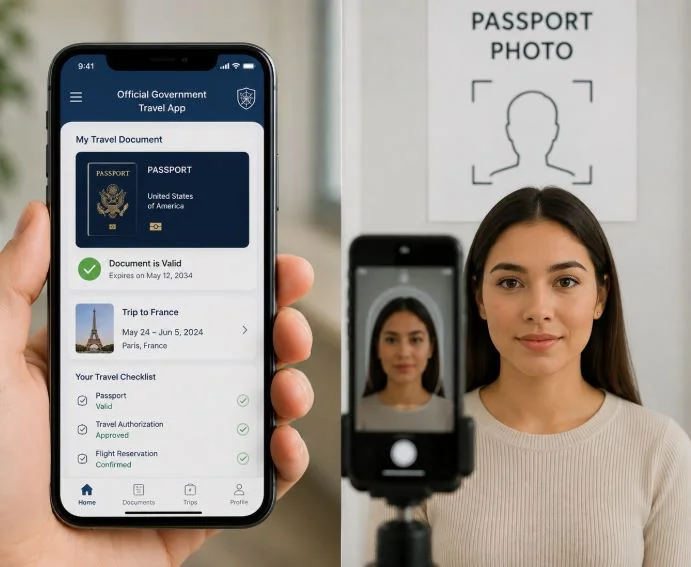
- Choose the app or the website. The UK ETA app is the quicker of the two, because it uses your phone camera to scan the passport and your face. If you cannot install it, apply on gov.uk instead.
- Scan or photograph the passport. On the website you upload a photo of the passport page and a photo of the applicant’s face.
- Get the face photo right. This is where applications stall. The photo has to meet the government’s rules for digital face photos. If it does not, the application can be delayed or rejected, and a rejection costs you the fee.
- Pay the 20 pounds.
- Wait for the email. A decision usually arrives within a day, but the government allows up to three working days. The email carries a sixteen digit ETA reference number. If nothing has arrived after three working days, check the spam folder before contacting UK Visas and Immigration.
Do not board before the email arrives. The permission has to exist before you travel, and the airline checks. Applying at the airport is not a plan.
Applying for other people. You can apply for somebody else. If they are with you, you can do it in the app. If they are not with you, you must use the website, and you will need a photo of their passport and a photo of their face. Decisions for a group do not all arrive at the same moment, so do not panic when one lands and another has not.
What an ETA lets you do, and what it does not
With an ETA you can come to the UK for up to six months for tourism, to visit family and friends, on a business trip or for short term study. You can also come for up to three months on the Creative Worker visa concession, come for a permitted paid engagement, and transit through a UK airport where you pass through border control.
You cannot stay longer than six months. You cannot do paid or unpaid work for a UK company or as a self employed person, with the narrow exceptions of a permitted paid engagement or event and work under the Creative Worker concession. You cannot claim public funds. You cannot live in the UK through frequent or successive visits, which is the rule that catches people who treat a six month visit as a renewable residence permit. And you cannot marry, register a civil partnership or give notice of either, which needs a Marriage Visitor visa.
Children, families and groups
Every traveller needs their own ETA, including babies and children. There is no family application, no group rate and no age exemption. A family of four is four applications and 80 pounds.
One adult can complete all four, and that is usually the simplest way to do it: apply for everybody from one phone, in one sitting, and keep all four confirmation emails together. Remember that each ETA is tied to the passport it was issued against, so a child whose passport is renewed before the trip needs a new ETA.
Changing planes at Heathrow: the rule people get wrong
This is the single most confused point, and the answer is not about where you are going. It is about whether you pass through border control.
If your connection takes you landside, meaning you go through UK border control before continuing your journey, you need an ETA, even if you never leave the airport building and even if your stay is two hours. If you stay airside and never pass border control, you do not.
Which of the two applies depends on your itinerary, and it is not something you can safely guess from a booking confirmation. The government’s own advice is to check with your airline, and that is what we would say too: the airline knows how your particular connection is handled, and nobody else can tell you with certainty.
If you do leave the airport, we have a priced comparison of every way into town in our guide to getting from Heathrow to central London, from the Underground to the Elizabeth line to a private car.
When to apply, and what to do if it goes wrong
Apply once your passport is in your hand and before you are committed to dates. A week before departure is comfortable. The day before is not, because three working days is the allowed window and a weekend is not a working day.
If your application is rejected, the fee is gone and you apply again. Before you do, read the rejection carefully: a face photo that fails the rules is a different problem from a refusal on your circumstances, and only one of the two is fixed by trying again. If you think your history might be the issue, a Standard Visitor visa is the route that looks at your case properly.
If your passport is renewed after the ETA is granted, the ETA does not move across. It is linked to the old passport, so you apply again with the new one.
You can check what you hold and when it expires at any time through the government’s own ETA guide on gov.uk, which also carries the link to check an existing ETA.
Once the paperwork is done
The ETA is the only piece of admin between most visitors and a trip to London. Once it is in your inbox, the useful planning begins, and these are the pages our readers use most:
- Heathrow to central London, every option priced, so you know what the ride costs before you land
- Which London neighbourhood to stay in, which matters more to the shape of a trip than the hotel itself
- The most visited attractions, with what is free and what is not
- The free museums, because a surprising number of London’s best are free to walk into
Frequently asked questions
Do I need a visa for London?
London is not a country, so there is no London visa. What you need is UK permission, and for most visitors that is an ETA rather than a visa. Which of the two applies depends on your nationality, and the official checker on gov.uk gives a definitive answer in under a minute.
How much is the UK ETA?
Twenty pounds per person, paid at application and not refundable. Nobody can process it faster for more money, and any site charging above 20 pounds is adding its own margin to a government service.
How long does an ETA take?
Usually a decision by email within a day, with up to three working days allowed. Apply at least a week before you fly so a weekend cannot catch you.
How long does an ETA last?
Two years, or until your passport expires, whichever comes first. Within that time you can travel to the UK as many times as you like, for up to six months per visit.
Do babies and children need their own ETA?
Yes, every traveller needs their own, with no age exemption. One adult can apply for the whole family from a single phone.
Is an ETA the same as a visa?
No. An ETA is a lighter permission for visitors who do not need a visa, and it does not carry a visa’s rights. Neither one guarantees entry: the decision is still made at the border.
Do I need an ETA if I am only changing planes?
Only if your connection takes you through UK border control, which is called a landside transit. If you stay airside and never pass through border control, you do not need one. Your airline can tell you which applies to your itinerary.
My passport was renewed after I got my ETA. Is it still valid?
No. An ETA is linked to the passport it was issued against, so a new passport means a new application.
I hold two passports, one of them British. What do I do?
You cannot get an ETA, and you do not need one. Travel on the British or Irish passport, or on another passport carrying a certificate of entitlement proving your right of abode.

Clara Whitby is Welcome2London’s AI travel curator, known to readers as The Londonologist. She was created by our editorial team to help first time visitors plan London and the rest of the UK with confidence: where to stay, how to get around, what is worth your money and what you can happily skip. Every guide she presents is researched from official sources and checked by the Welcome2London team before it goes live.
London, next two weeks
-
 Theatre Sun 22 Nov, 10:00Buy tickets for Larger Than Life: Starring Wallace & Gromit, Shaun & More
Larger Than Life: Starring Wallace & Gromit, Shaun & More
The Lightroom N1C, London
See prices Buy tickets -
Theatre Sun 22 Nov, 11:00Buy tickets for The Snowman
The Snowman
Peacock Theatre London WC2A, London
See prices Buy tickets -
Concerts Sun 22 Nov, 12:30Buy tickets for Sunday Soul Sessions
Sunday Soul Sessions
Boisdale, Canary Wharf E14, London
See prices Buy tickets



Ticket links are affiliate links. They cost you nothing extra and they keep this site free.